
Product Label Design:

Talk to your client
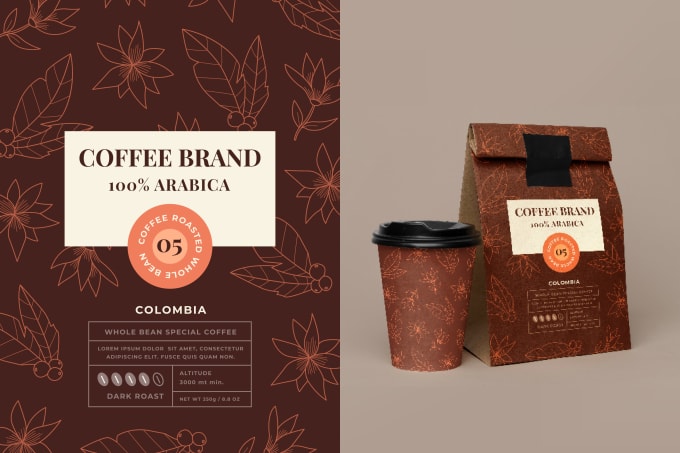
Here's what a label template might look like:

- The company logo
- Product detail: Check to see if the details provided tell you what the product is, who is likely to buy it, and why. Your client should also tell you if this product is part of a series with an established design style.
- Required file types and dimensions: Some clients will provide this information. If they don't, you could ask to connect directly with the printer.
- Type of packaging: This will help determine whether you need to create a front and back label (eg. cereal box), or a label that runs around (eg. beer bottle).
- The copy (text)
- Branding guidelines: Not all clients have this, but ask if they do, so you can follow guidelines.
- Preferences: Most clients have preferences for the look and feel of the label, from shapes (square, oval, etc.) to colors. Make the most of your design time and get a clear idea from the start.
Anatomy of a label design

The trim line is where the printer cuts your label design. The bleed area is anything that lies beyond the trim line. Extend artwork to this area to avoid unwanted gaps in your final label design
What’s included in a typical label design?

- Ingredients
- Certifications
- Best before date
- Serving suggestions or recipes
Barcode

- UPC: Universal Product Code, the predominant barcode in North America
- EAN: International Article Number, a global barcode
We specialize in product label design
As a specialist in product label design, we have the knowledge and expertise to create labels that effectively communicate the necessary information about a product and make it stand out on the shelves. By taking advantage of your service, clients can benefit in several ways:
Professional design: A professionally designed label can help a product stand out among the competition and communicate important information in a clear and visually appealing manner. As a specialist in product label design, you can create designs that effectively convey the brand message and help the product connect with its target audience.
Compliance with regulations: Certain products may be subject to regulations and requirements for labeling. As a specialist in product label design, you have knowledge of these regulations and can ensure that the label design is compliant with them, avoiding potential legal issues.
Consistency across products: If a brand has multiple products, it is important to maintain consistency across their labels to establish a strong brand identity. As a specialist in product label design, you can create labels that maintain consistency in design and messaging across all products, enhancing the brand's recognition and recall value.
Cost-effective solution: Hiring a specialist in product label design can be a cost-effective solution compared to hiring an in-house design team. This can be particularly beneficial for small businesses that do not have the resources to hire a full-time design team.
Overall, taking advantage of your service as a specialist in product label design can help clients enhance their product's visibility, establish a strong brand identity, and ensure compliance with regulations, ultimately leading to increased sales and customer loyalty.
know some things before designing the product level
It's important to know certain things before designing a product label to ensure that it effectively communicates the necessary information and appeals to the target audience. Here are some things to consider:
Target Audience: Understanding the target audience is crucial in designing a product label that resonates with them. Consider factors such as age, gender, lifestyle, and purchasing behavior of the target audience.
Branding: The product label should be consistent with the branding of the company and the product. It should incorporate the brand logo, color scheme, and overall aesthetic to create a cohesive look and feel.
Legal Requirements: Certain industries have legal requirements for product labeling, such as displaying ingredients, nutritional information, and certifications. Make sure to research and comply with any relevant regulations.
Product Information: The product label should clearly and accurately communicate important information about the product, such as ingredients, usage instructions, and any relevant warnings.
Differentiation: The product label should differentiate the product from competitors and highlight its unique selling points. Consider what sets the product apart and how that can be effectively communicated through the label design.
By considering these factors before designing a product label, you can create a design that effectively communicates the necessary information and appeals to the target audience, while also remaining compliant with any relevant regulations.
About the Mistakes that Designers
Product label design is a critical element in the success of any product. However, there are common mistakes that designers can make that can negatively impact the effectiveness of the label. Here are some of the most common mistakes that designers make when designing product labels, and how to avoid them to ensure your labels stand out and effectively communicate the necessary information:
Overcomplicating the design: One of the biggest mistakes designers can make is overcomplicating the design. A cluttered and busy label can be overwhelming for consumers, leading them to overlook important information. To avoid this mistake, focus on a clean and simple design that prioritizes the most important information.
Poor typography: Typography plays a critical role in the readability and legibility of a product label. A common mistake designers make is using a font that is difficult to read or doesn't work well with the other design elements. To avoid this mistake, choose a font that is easy to read and appropriate for the product and target audience.
Not considering the label's size: The size of the label is an important consideration in the design process. Designers may create a label that looks great in a large format, but when reduced to actual size, the design may become too busy or the text too small to read. To avoid this mistake, design the label at actual size or consider how it will appear at different sizes.
Ignoring legal requirements: Certain industries have legal requirements for product labeling, such as displaying ingredients, nutritional information, and certifications. Ignoring these requirements can lead to legal consequences and negatively impact the credibility of the product. To avoid this mistake, research and comply with any relevant regulations.
Lack of brand consistency: Consistency in branding is crucial for the success of a product. A product label that is inconsistent with the brand's visual identity can be confusing for consumers and weaken the brand's overall image. To avoid this mistake, ensure that the product label is consistent with the brand's overall visual identity.
By avoiding these common mistakes, you can create product labels that effectively communicate the necessary information, stand out on the shelf, and contribute to the overall success of the product. As a designer who is aware of these mistakes, you can differentiate yourself by creating exceptional product label designs that meet the client's goals and resonate with the target audience.
What are the problems when printing a label?
Printing a label can come with several problems that can affect the final output. Here are some of the most common problems when printing a label:
Color accuracy: Achieving accurate colors can be a challenge when printing labels. This is because colors can appear differently depending on the printer, the substrate (material), and the lighting conditions. To address this issue, ensure that you are using a high-quality printer and that the colors are calibrated to match the desired output.
Smudging and bleeding: Smudging and bleeding occur when the ink of the printed label spreads or smears. This can happen if the label is not properly dried or if the substrate is not suitable for the printing process. To avoid this issue, use a substrate that is compatible with the printing process and ensure that the label is thoroughly dried before handling.
Label placement: Proper label placement is crucial for the label to adhere properly to the product. If the label is not positioned correctly, it can wrinkle, peel, or come off altogether. To address this issue, ensure that the label placement is precise and that the substrate is clean and dry.
Curling: Curling is when the label curls at the edges or corners. This can happen due to humidity or improper storage of the substrate or label material. To avoid this issue, store the substrate and label material in a dry and stable environment.
Print quality: Print quality refers to the overall clarity, sharpness, and resolution of the label. Poor print quality can result in a label that is difficult to read or that appears blurry or distorted. To address this issue, ensure that the printer is properly maintained and that the printing process is optimized for the substrate and label material.
By being aware of these common problems when printing a label, you can take steps to ensure that the final output meets the desired quality standards and effectively communicates the necessary information to the target audience.
How to solve problems
Here are some tips on how to solve problems when printing a label and how to design it to avoid problems:
Use high-quality materials: Using high-quality materials for the substrate and label material can help ensure that the label prints properly and adheres well to the product. Choose materials that are compatible with the printing process and that can withstand the environment in which the product will be used.
Optimize the printing process: Optimize the printing process by calibrating the printer and ensuring that the printing settings are appropriate for the substrate and label material. This can help achieve accurate colors, sharp images, and prevent smudging or bleeding.
Allow for proper drying time: Properly drying the label after printing can help prevent smudging and ensure that the label adheres properly to the product. Allow for sufficient drying time based on the printing method and the materials used.
Check label placement: Double-check the placement of the label to ensure that it adheres properly to the product and does not wrinkle or peel. Ensure that the substrate is clean and dry before applying the label.
Design for printability: When designing the label, keep in mind the limitations and capabilities of the printing process. Avoid using colors or design elements that may be difficult to print accurately. Also, consider the size and placement of the label to ensure that it can be printed and applied properly.
Test before printing: Test the label design and printing process before printing a large batch. This can help identify any potential issues and allow for adjustments to be made before printing a final product.
By following these tips, you can help prevent problems when printing a label and ensure that the final product meets the desired quality standards. Additionally, designing the label with printability in mind can help avoid issues such as color accuracy, smudging, and label placement.
The preliminary preparation to design a label
Before designing a label, there are several preliminary preparations that should be made to ensure that the final design is effective and meets the necessary requirements. Some of these preparations include:
Understand the product: It is important to understand the product that the label will be designed for, including its target audience, key features, and benefits. This will help guide the design process and ensure that the label effectively communicates the necessary information to the consumer.
Research the competition: Researching the competition can help identify design trends, as well as potential opportunities to differentiate the product through the label design. This can also help ensure that the design stands out and effectively communicates the product's unique selling proposition.
Determine the label specifications: Before beginning the design process, it is important to determine the label specifications, including the size, shape, and materials. This will ensure that the design is optimized for the label dimensions and printing method.
Identify the required information: Certain products may be subject to regulations that require specific information to be included on the label, such as ingredients or warnings. It is important to identify this required information and ensure that it is included in the design.
Define the brand identity: The label should effectively communicate the brand's identity and values. This can be achieved through consistent use of colors, typography, and other design elements that are consistent with the brand's overall aesthetic.
By completing these preliminary preparations, designers can ensure that the label design is effective, meets the necessary requirements, and effectively communicates the necessary information to the consumer.
What will the client benefit from we
By getting their product label designed from you, the client can benefit in several ways:
Professional design: As a product label design specialist, you have the expertise to create a professional and visually appealing label that will stand out on the shelves and attract the attention of consumers. A well-designed label can help the product to connect with its target audience and communicate important information in a clear and effective way.
Compliance with regulations: Certain products may be subject to regulations and requirements for labeling. As a product label design specialist, you have knowledge of these regulations and can ensure that the label design is compliant with them, avoiding potential legal issues.
Increased brand recognition: A well-designed label can help to establish a strong brand identity, which can lead to increased brand recognition and recall value. By consistently using design elements that are consistent with the brand's overall aesthetic, you can help to create a cohesive and recognizable brand image.
Cost-effective solution: Hiring a product label design specialist can be a cost-effective solution compared to hiring an in-house design team. This can be particularly beneficial for small businesses that do not have the resources to hire a full-time design team.
Improved sales: A well-designed label can help to improve sales by attracting the attention of consumers and communicating the product's unique selling proposition. By creating a label that effectively communicates the benefits of the product, you can help to increase consumer interest and drive sales.
Overall, by getting their product label designed from you, the client can benefit from a professional and effective label design that meets their specific needs and helps to improve their brand recognition and sales.
You’re almost there
The post-design checklist
- Show your design in its real-life setting: Imagine the way your label design will look in places it is intended for—think about how it will look on the supermarket shelf and in customer homes. Will it stand out or will it blend in with the other products?
- It’s all in the details: Triple check that you have all the important design elements included in the label. As the designer, you are legally required to do so. If the product is organic (and your client has provided the proof it is so), then you need to include the “organic” certification in your label.
- Get organized, your client will thank you for it: For the handover, make sure you organize your files in a way that’s easy for the client to use. If you are providing label designs for different packaging, save them separately and name clearly to avoid confusion.
Handover
- An editable version of the final design (AI, PSD, PDF, or EPS)
- All web preview images (JPEG or PNG)
- A link to purchase any commercial fonts used in the design
Ready to take your product to the next level with a professionally designed label? Contact us today to get started and see the difference a well-designed label can make in your brand recognition and sales.


.jpg)



.jpg)

.jpg)


0 Comments